
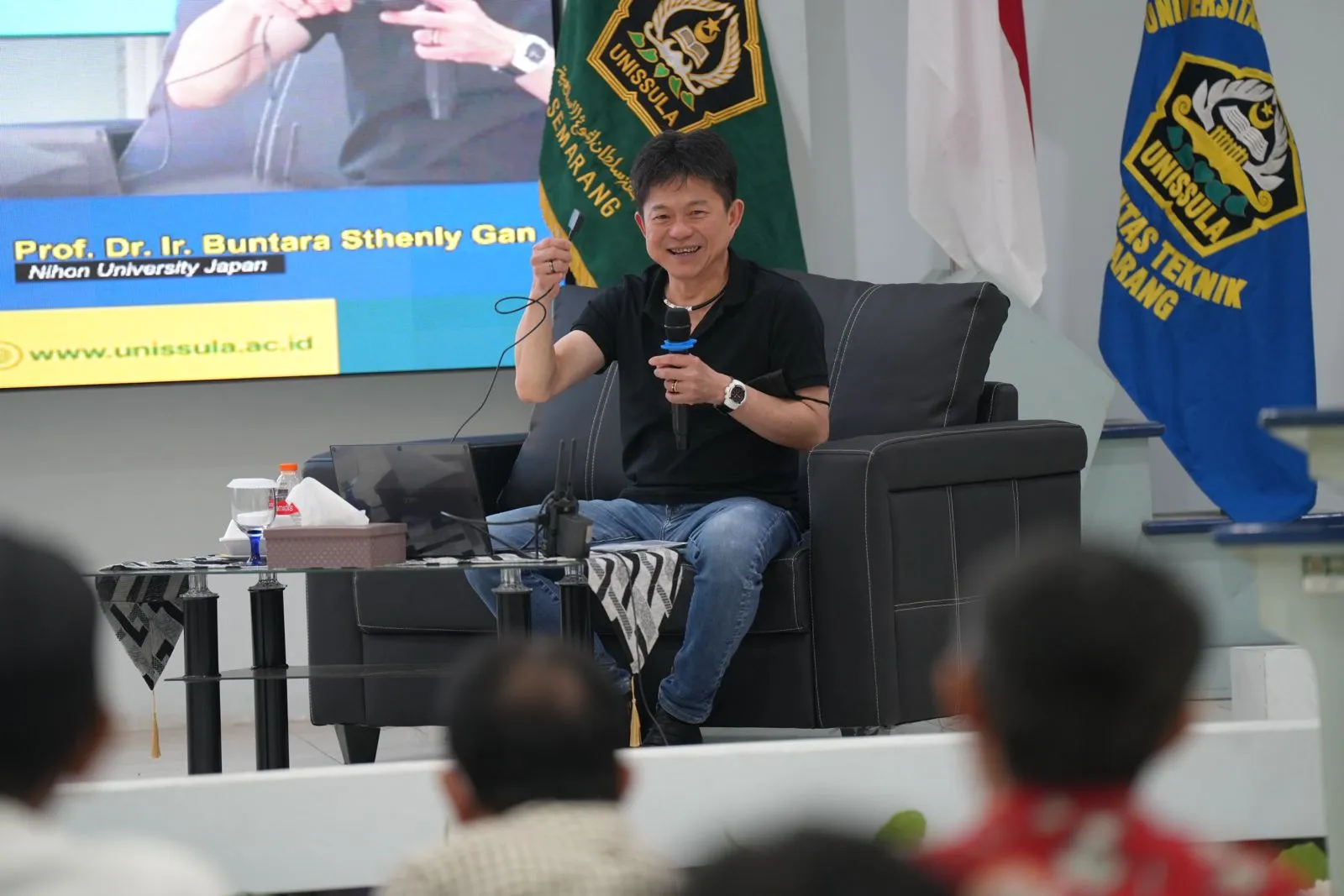
The Faculty of Engineering at Sultan Agung Islamic University (Unissula) held a seminar and workshop on vibration measurement and structural dynamic response analysis on Thursday (October 1, 2026). The event took place in the 2nd-floor seminar room of the Unissula Faculty of Engineering and featured a structural engineering expert from Nihon University, Japan, Prof. Dr. Ir. Buntara Sthenly Gan, M.Eng.
The seminar and workshop focused on the theme "Installation of Vibration Measurement Devices and Structural Dynamic Response Analysis Using QSEERB (Quantitative Shaking Evaluation for Earthquake-Resistant Building)." This event was part of an effort to enhance understanding of measurement technologies and the evaluation of building structural resilience. Participants included lecturers, students, and researchers from the Unissula Faculty of Engineering.
The Dean of the Unissula Faculty of Engineering, Dr. Abdul Rochim, S.T., M.T., opened the event. He expressed his appreciation for the academic collaboration with Nihon University, Japan, noting that mastering disaster mitigation technology is crucial for academics and aspiring engineers in Indonesia.
"This event serves as a significant milestone for the Unissula Faculty of Engineering to continuously update its knowledge and technology regarding structural resilience. We hope that the knowledge transfer concerning QSEERB technology from Prof. Buntara will improve the quality of our research. Earthquake-resistant building technology is highly essential, particularly in earthquake-prone regions like Indonesia," said Dr. Abdul Rochim.
During the main session, Prof. Buntara explained the QSEERB method. This method is used to quantitatively measure and analyze a structure's dynamic response to vibrations. The measurement results can be used to evaluate the condition and resilience level of building structures against shaking.
In addition to the presentation, participants took part in a workshop session. They gained hands-on experience installing vibration measurement instruments on structural models and practiced analyzing dynamic response data firsthand.
The event provided an opportunity for lecturers, students, and researchers to gain an understanding of vibration measurement technology applications. This knowledge can support learning and research activities in the field of civil engineering, particularly research related to building structures and earthquake risk mitigation.
Through this initiative, the Unissula Faculty of Engineering continues to strengthen its international academic network. Collaboration with experts and universities from Japan is expected to open up opportunities for joint efforts in education and research. These efforts also support the development of innovative building technologies that are safer and more earthquake-resistant.