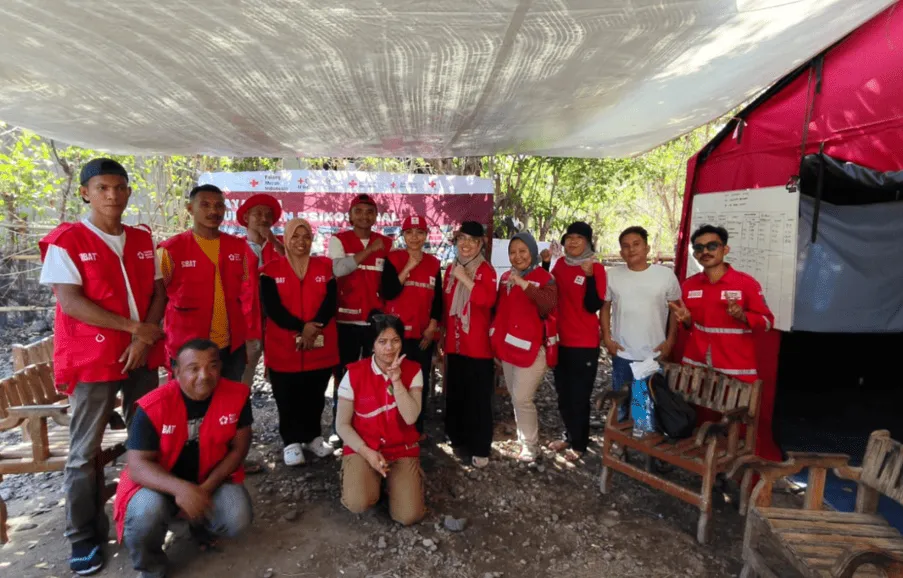
Yuli Arinta Dewi, S.Psi., M.Si., a lecturer at the Faculty of Psychology, Sultan Agung Islamic University (Unissula), contributed to a humanitarian mission by facilitating group support sessions for staff and volunteers of the Indonesian Red Cross (PMI) in Manggarai Regency. Organized by the PMI National Headquarters from October 12–15, 2026, the initiative aimed to support the well-being of humanitarian workers as they addressed the aftermath of the 2026 Flores earthquake. Yuli served as a group support facilitator alongside Noviyanti from the East Jakarta chapter of the PMI.
The participation of the Unissula lecturer exemplifies how academics can contribute to supporting humanitarian workers who face various challenges in the field. Beyond their duty to provide aid to disaster-affected communities, PMI staff and volunteers also require a space to share their experiences and receive support. Consequently, prioritizing their well-being is essential for sustaining humanitarian services.
The program began on October 12, 2026, with coordination meetings involving the Head of the PMI Provincial Headquarters and the Provincial Health Coordinator. On October 13, group support was provided to volunteers from the Community-Based Disaster Preparedness (SIBAT) program in the villages of Para Lando and Lemarang. On October 14, the sessions continued for volunteers from the Water, Sanitation, and Hygiene (WASH) team, who are responsible for providing clean water, sanitation, and hygiene services.
On October 15, group support services were extended to the staff and volunteers of the PMI Manggarai Regency chapter involved in disaster response efforts. The program concluded with the submission of a brief report to the Head of the Headquarters, followed by coordination regarding plans to sustain these services in East Manggarai and West Manggarai.
Through these group support sessions, participants were given the opportunity to share their experiences from their humanitarian work. They were also encouraged to recognize their emotional responses to difficult situations and to learn from one another about how to cope with pressure. The activity includes simple psychoeducation on stress management and the importance of social support among humanitarian workers.
Group support sessions are conducted in an environment that is safe, voluntary, and based on mutual respect. Participants are not required to share experiences that might make them feel uncomfortable; this approach allows each individual to engage according to their own level of readiness and personal needs.
The program aims to strengthen the capacity of staff and volunteers to navigate the challenges they face while on duty, while simultaneously fostering a work environment characterized by care and mutual support. The well-being of humanitarian workers is a critical concern, as they, too, encounter significant pressure while carrying out their duties in disaster-affected areas.
The involvement of Yuli Arinta Dewi in this initiative demonstrates how faculty members from Unissula can contribute by applying their expertise to address the needs of the community and humanitarian organizations. Through this program, the Indonesian Red Cross (PMI) Headquarters emphasizes that support is not only required by those affected by disasters, but also by those who provide the aid—for even the helpers themselves need a space where they can be heard and supported.