Dr. Pungky Lela Saputri, SST, ME, a lecturer at the Faculty of Economics and Business (FEB) at Unissula, participated in an international research project on sustainability in New Zealand. This initiative was part of the "MORA The Air Fund" grant program, funded by the Indonesia Endowment Fund for Education (LPDP). The academic visit took place from October 19 to 25, 2026.
The research program was led by Prof. Abdurrahman Mas’ud, MA, PhD—a professor at UIN Walisongo who previously served as the Head of the Research, Development, and Training Agency at the Indonesian Ministry of Religious Affairs (2014–2020). The visit included academic activities at the University of Auckland, interdisciplinary discussions, and engagement with the Māori community. These activities were designed to deepen the understanding of the relationships between humanity, culture, and nature in the pursuit of sustainability.
As an academic specializing in Islamic financial management and Islamic economics, Dr. Pungky contributed perspectives on the common good (*maslahah*), socio-economic justice, and the responsible management of resources. This viewpoint enriched the discourse on sustainability by incorporating economic dimensions and Islamic values. The interdisciplinary collaboration also fostered a dialogue between religious values, local wisdom, and sustainable practices.
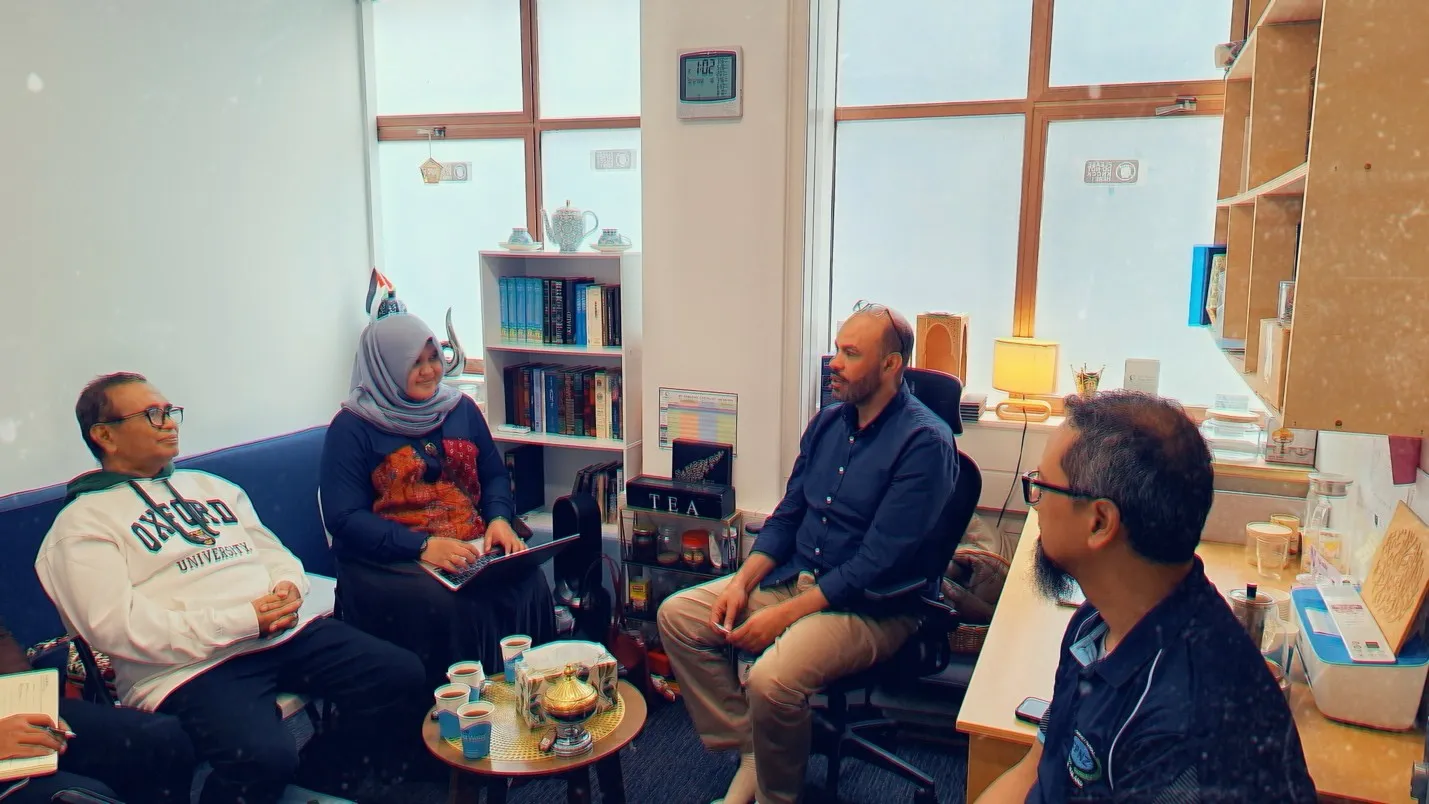
One of the sessions involved a discussion with the Muslim Chaplain at the University of Auckland, focusing on the integration of Islamic values into environmental conservation through the lens of Islamic eco-theology. During this discussion, the concept of human responsibility as *khalifah* (steward) served as a foundational principle for understanding the obligation to protect nature and ensure environmental sustainability.
The delegation also visited Papatoetoe Intermediate School, which implements the "Enviro-Schools" approach. At the school, participants explored educational activities that link environmental stewardship with entrepreneurship—such as raising chickens, cultivating organic crops, and producing honey. These activities demonstrate how environmental practices can serve as a medium for learning about economics and responsibility toward resources.
Cultural learning took place with the Māori community in Kaitaki Village, New Zealand, where participants explored values of sustainability passed down through generations. In the Māori worldview, the human relationship with nature is reflected, among other ways, through the philosophy of *Ranginui* (Sky Father) and *Papatūānuku* (Earth Mother). Together, they symbolize an interconnectedness between nature and life—a bond that must be respected and protected.
This philosophy positions humanity as an integral part of the web of life, rather than as masters of nature entitled to limitless exploitation. This message is encapsulated in the phrase, “If the Earth dies, then we die”—a stark reminder that the destruction of the Earth also threatens human survival.
Pungky’s participation in these activities is part of an effort to broaden the contributions of Unissula academics to the development of knowledge regarding sustainability. Such cross-national and cross-cultural experiences enrich academic perspectives on the interplay between economics, religious values, local wisdom, and environmental conservation. Furthermore, the insights gained hold the potential to inform the development of research and educational initiatives that address sustainability challenges in Indonesia.