

The construction of toll roads plays a strategic role in fostering economic growth and improving public welfare. However, its implementation must be balanced with legal certainty and the protection of public rights, particularly during the land acquisition process and the determination of compensation amounts.
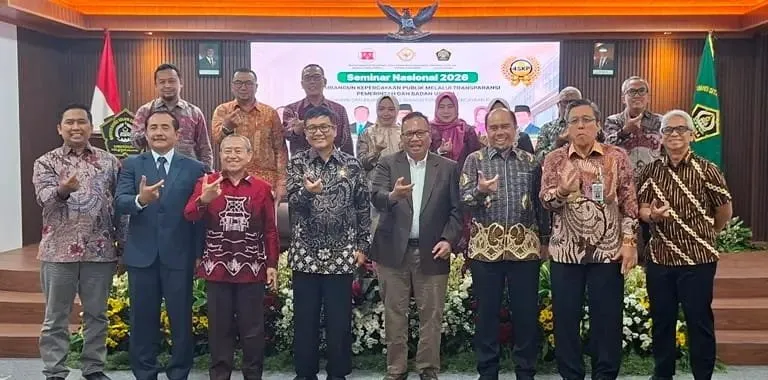
This issue has drawn the attention of Prof. Dr. Bahtiyar Efendi, S.Pd., S.H., M.M., M.H., a professor at the Faculty of Law, Unissula. He highlights several legal challenges within the land acquisition mechanism for infrastructure development—specifically regarding the valuation of compensation and the application of "consignment" (the depositing of compensation funds with a district court).
According to him, the development of toll roads is a vital component of the government's strategy to accelerate interregional connectivity. An adequate road network is expected to facilitate the distribution of goods and services, boost economic activity, and promote public well-being. The Trans-Java Toll Road, which connects Anyer to Banyuwangi, serves as an example of a strategic project aimed at enhancing national connectivity.
Nevertheless, the success of infrastructure development should not be measured solely by the completion of physical projects; the aspect of fairness in land acquisition must also be a primary concern.
A recurring issue is the discrepancy between the compensation value for land and the Tax Object Selling Value (*Nilai Jual Objek Pajak* or NJOP). Such discrepancies can create complications in administrative processes and government financial accountability—for instance, during audits concerning the reasonableness of budget expenditures.
"Determining the amount of compensation must be done carefully, transparently, and based on an assessment that can be held accountable. The NJOP should not be the sole metric for determining land value, as other factors must be taken into account to ensure a fair and equitable valuation for the public," he explained on Thursday (November 19, 2026).
He also addressed the mechanism of consignment as an instrument for resolving issues related to land acquisition. Consignment is a mechanism for depositing compensation funds with a district court when specific circumstances prevent direct payment to the entitled party or when an agreement cannot be reached.
Provisions regarding the deposit of such compensation are stipulated, among other places, in Article 42 of Law Number 2 of 2012 concerning Land Procurement for Development in the Public Interest. Under these provisions, compensation may be deposited under certain conditions, including instances where a landowner rejects the amount of compensation offered.
Nevertheless, according to Bahtiyar, consignment should not be interpreted as an instrument to disregard the rights of individuals affected by development projects.
"Deliberations should serve as a space to reconcile the interests of the government with those of the landowners. If such deliberations fail to reach an agreement, the resolution must still prioritize the principles of justice and legal certainty. Consignment must not become a tool that deprives the public of the opportunity to advocate for their rights," he stated.
He explained that, from a legal perspective, the concept of consignment is also recognized under Article 1404 of the Indonesian Civil Code. This provision stipulates that if a creditor refuses a payment, the debtor may make a formal offer of payment, followed by the deposit of the funds or goods with the court.
This principle demonstrates that consignment is a legal mechanism for resolving payment-related issues; it does not grant any party the justification to act arbitrarily toward another.
Furthermore, he cautioned that depositing compensation funds with a court does not automatically signify the resolution of all matters concerning land rights. The implementation of development projects must still adhere to statutory regulations, established land procurement procedures, and the provision of legal protection for affected individuals.
He added that if the public does not accept the form or the amount of compensation, there must be an accessible and fair mechanism for lodging objections and resolving disputes. Thus, development interests must not negate the public's right to legal protection.
Another issue is the lack of optimal information transparency regarding the process of valuation and the determination of compensation. Although valuations are conducted by independent appraisers, the public is entitled to a clear explanation concerning the basis for the valuation, the components taken into account, and the mechanism used to determine the compensation amount.
"Transparency is crucial. The public must know how the value of their land and other assets is calculated, which components form the basis of the valuation, and what procedures are available for filing an objection if they believe the determined value does not accurately reflect their actual losses," he explained.